Magna Ekklesia:
The Hagai Sophia
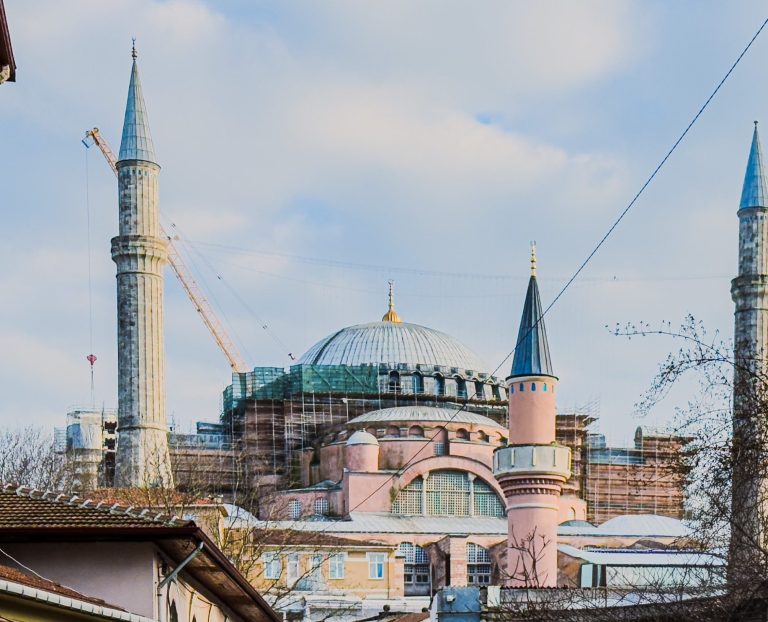
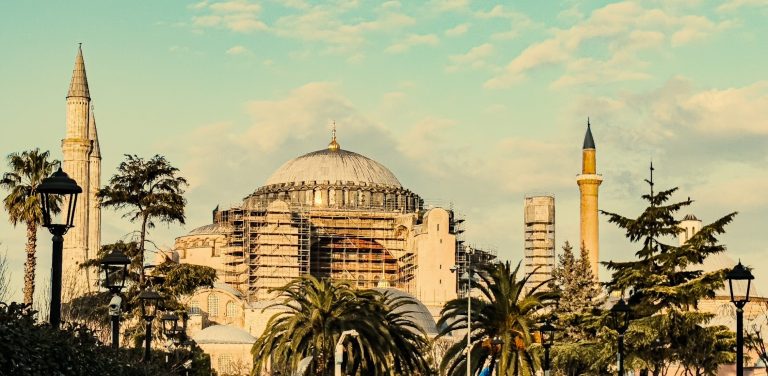
In a city replete with history, where each street corner seems to have a piece of beautiful historical architecture, there stands one site that towers above them all in stature and significance, the Hagia Sophia. The figure that looms large in the Istanbul skyline is technically the “third Hagia Sophia,” as the previous two Hagia Sophias had been destroyed when the city was sacked. The Hagia Sophia that can be seen today was completed in 537 AD under the orders of Emperor Justinian I. He would appoint Isidore of Miletus and Anthemius of Tralles to head up the construction of the larger, grander new Magna Ekklesia. Justinian wanted the church to be a reflection of the empire itself, so he had the building constructed with materials from across the Empire; Marble pillars would be crafted from Turkish marble, the bricks for the walls and floors were brought from North Africa, and the grand entrance doors were taken from Greek temples and repurposed for the grand church. The scale of the church is massive, and it has required upkeep and renovations throughout the centuries. Indeed, the ages have not been kind to the old gal, as conquest and imperial expansion put her in the hands of the Latin West and the Ottomans for much of her history. However many conquerors she saw, every leader who laid eyes on such a marvelous architectural feat saw it as a disservice to let this grand religious spectacle come into disrepair. Currently, the Hagia Sophia operates as a mosque, as it had during Ottoman control, and was under construction when we visited.
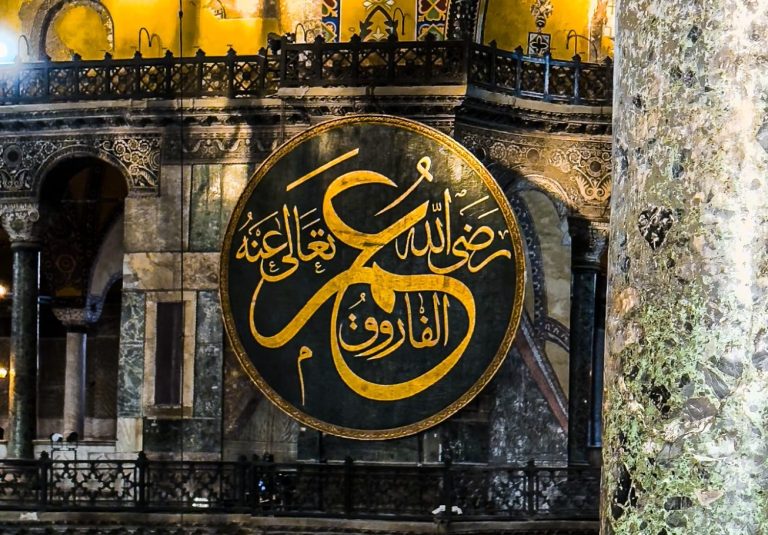
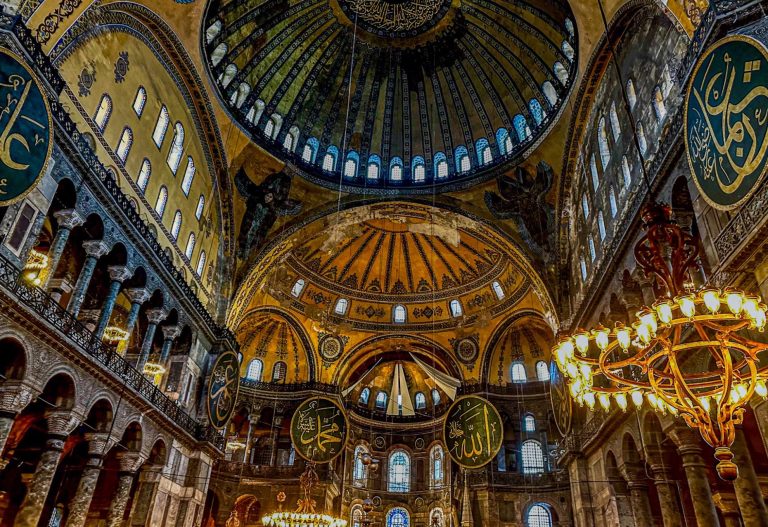
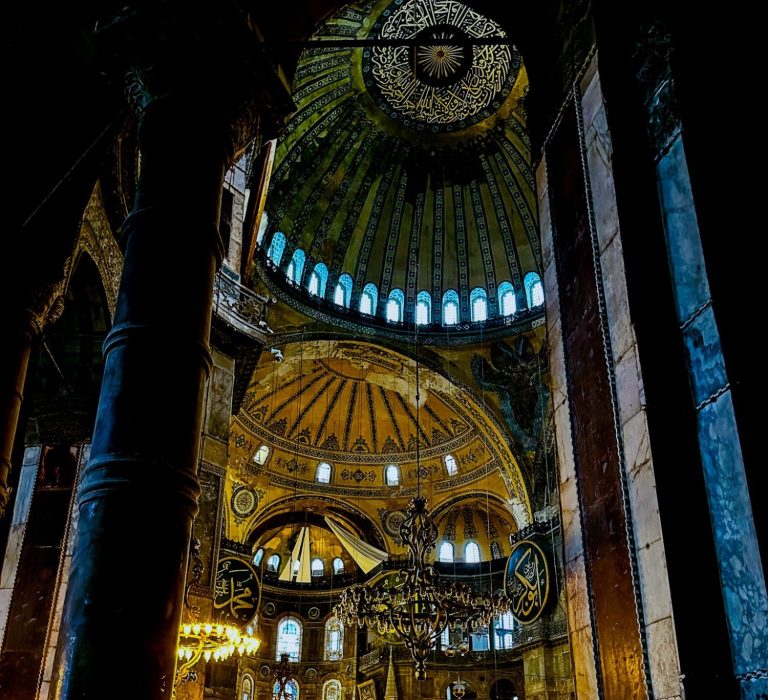
This church is so grand that, despite large construction equipment taking up much of the space, you can feel the history in the stones. When you step into the main room on the ground floor, you step backward into antiquity. The best way to describe my thoughts and feelings in the main room: it’s the feeling of being minuscule without being insignificant. You are surrounded by pillars and domes that have outlasted empires and countless generations. The angels painted in the corners look down on you from ages past; the colossal domes hang in the air over you, their gilded Arabic calligraphy shimmering in the sunlight. You’re surrounded by marble on all sides with large brass chandeliers that light the room with a yellow glow akin to torchlight. One can only imagine the acoustics in the room, the old Gregorian chants that once filled the space in the earliest years. I spent an hour and a half in awe of the space, feeling out of time and removed from the world around me. The Hagia Sophia truly fosters an atmosphere of religious awe and wonder, and I recommend everyone visit. (Give it a few months so you can enjoy it without large-scale restructuring work.)